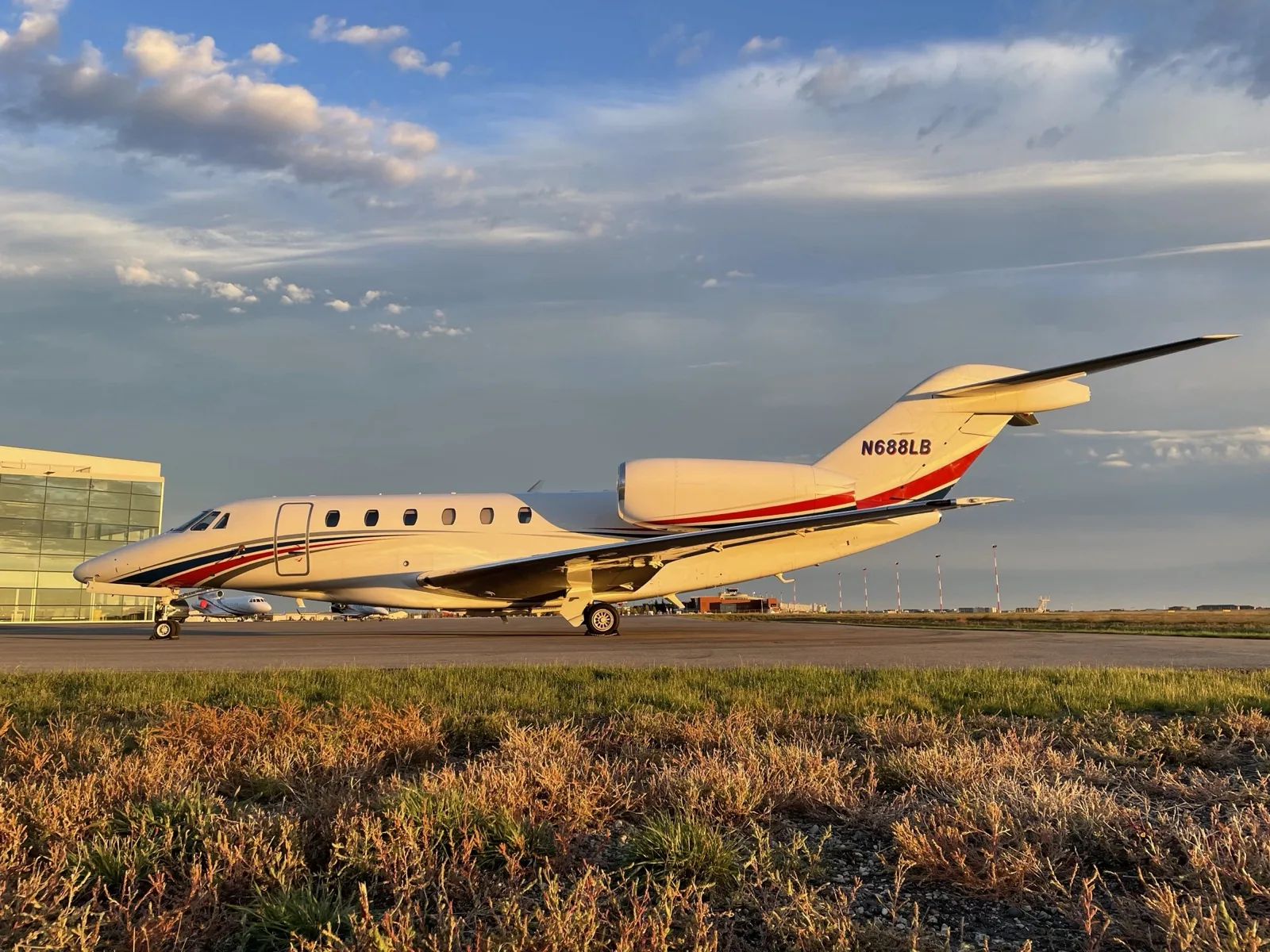
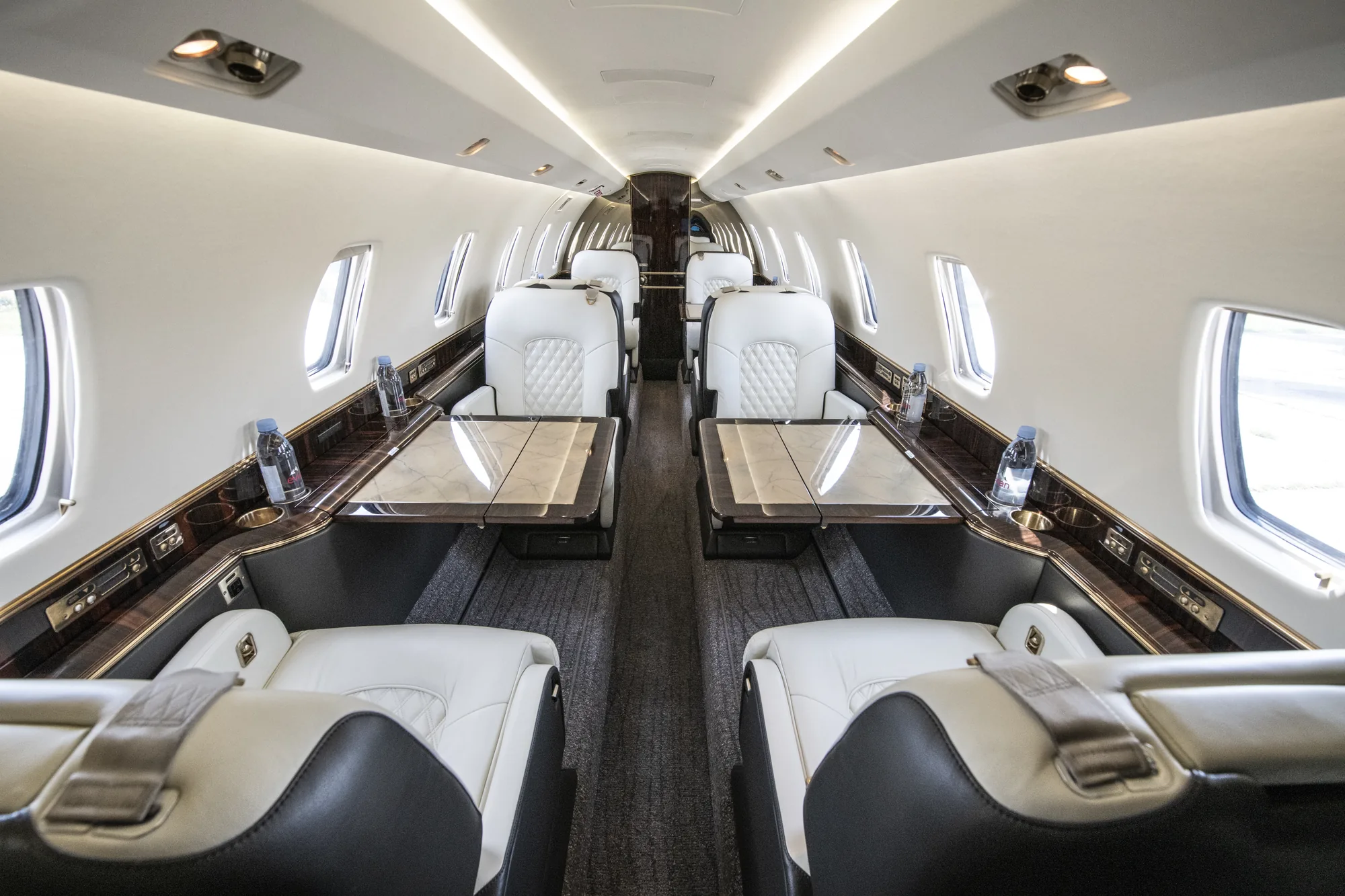
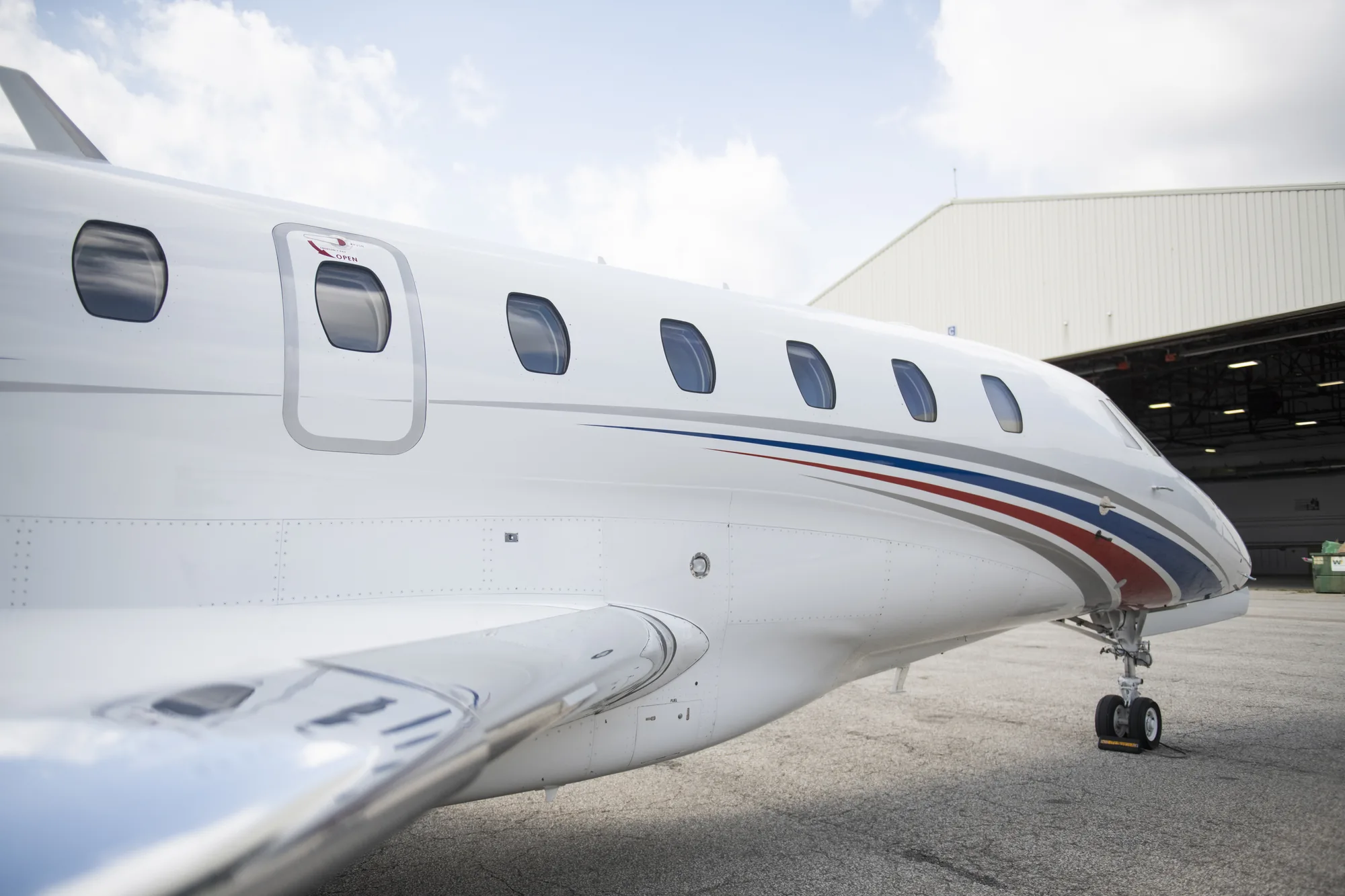
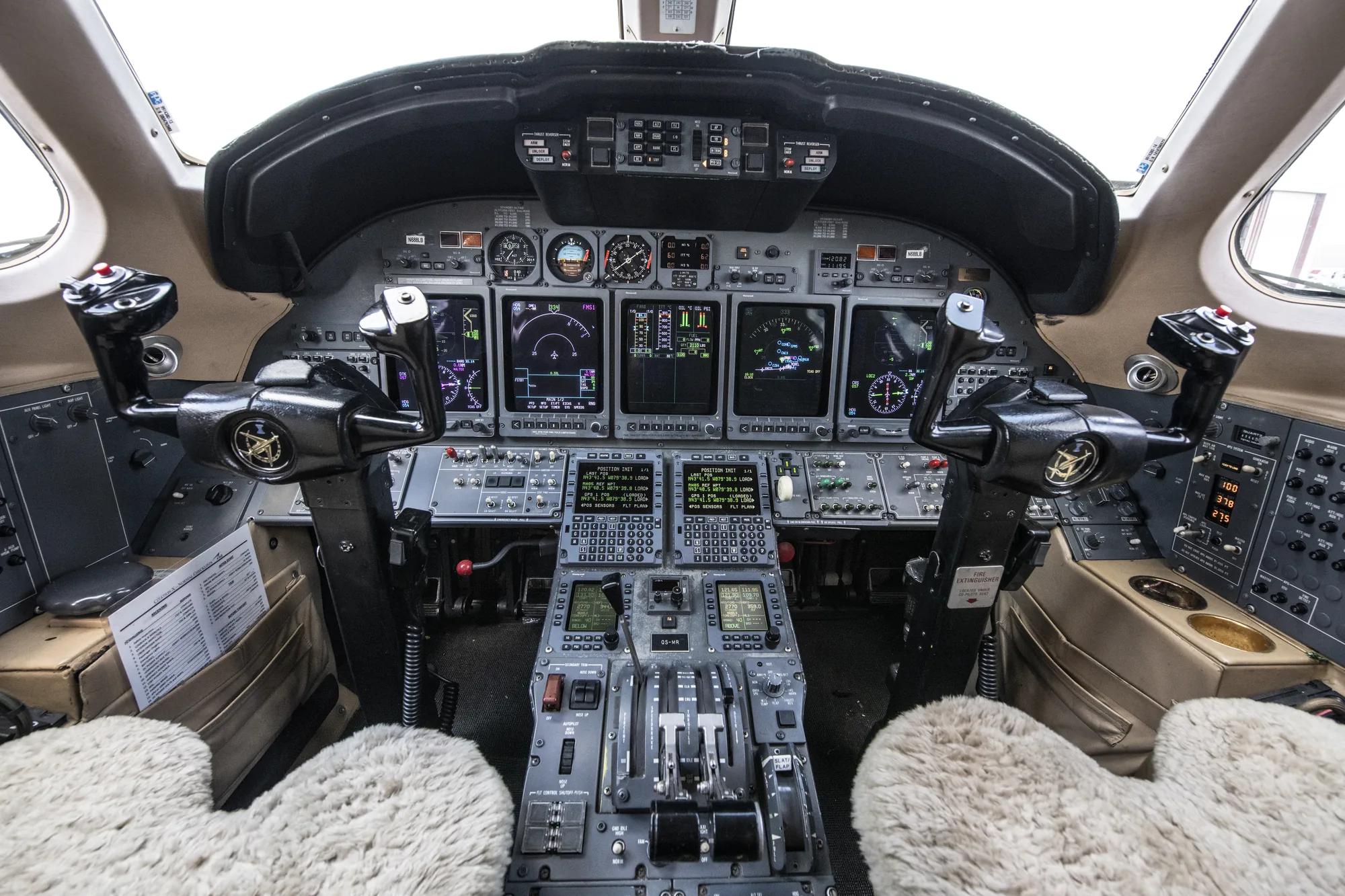
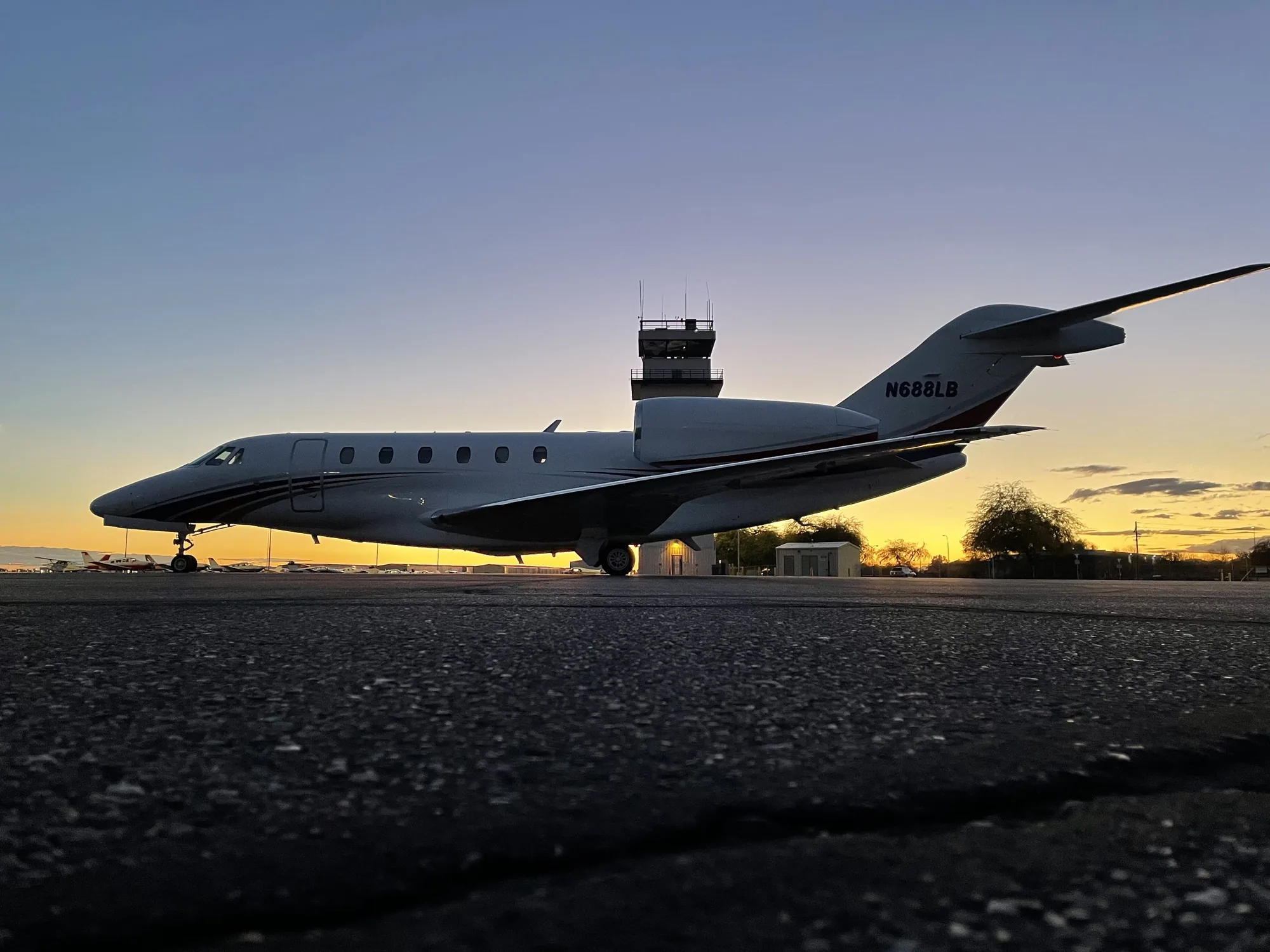
How much does a Cessna Citation X cost?
Buying a Cessna Citation X outright is a multi-million dollar purchase, and the price moves constantly with year, total time, engine program status and maintenance condition, so current market listings are the place for that figure. What we can state precisely is the share price: a Citation X share in the Jet Corp program starts at $495,000, with a $7,500 occupied flight hour, 50 hours a year and a 24 month term. There is no monthly management fee, and maintenance, crew, insurance and training are carried by Jet Corp for the full term. Four shares are currently available.
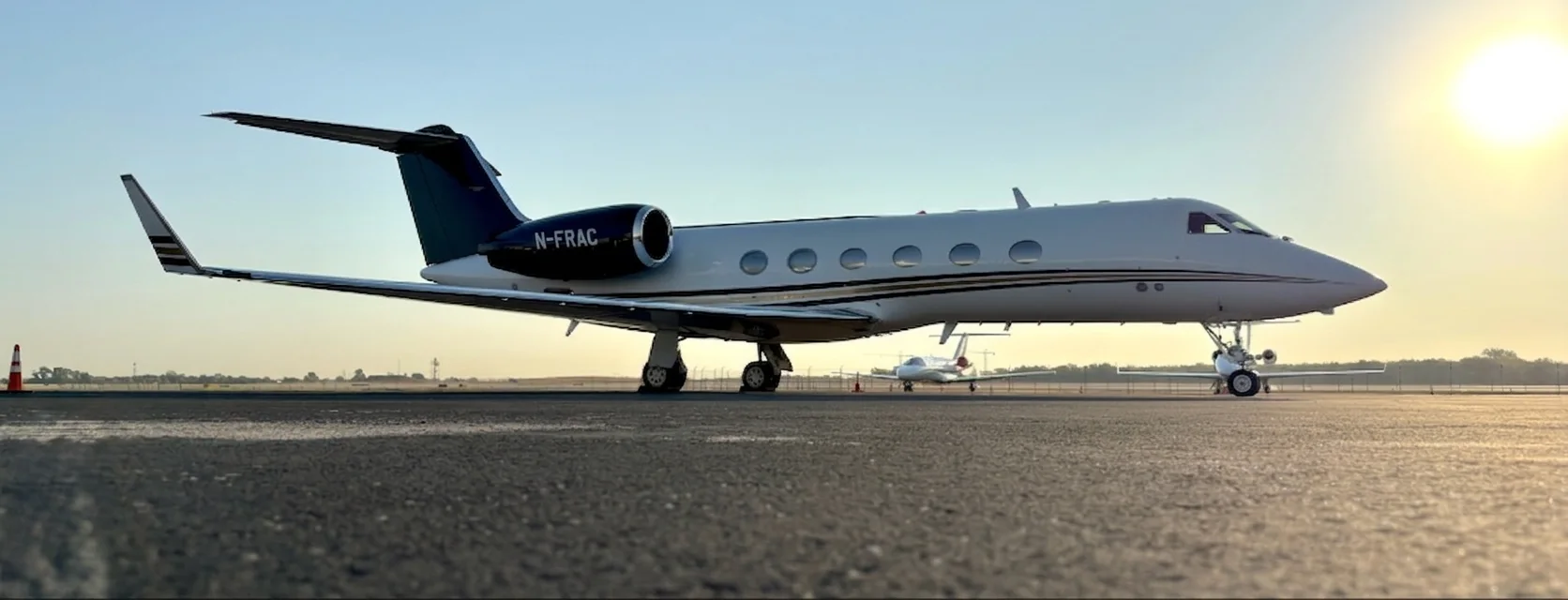
How much does a Gulfstream G-IV cost?
A Gulfstream G-IV bought outright is a multi-million dollar commitment before you have paid for crew, maintenance or insurance, and the figure varies widely by year and condition. In the Jet Corp program a Gulfstream G-IV share starts at $749,500, with a $9,875 occupied flight hour, 50 hours a year and a 48 month term. There is no monthly management fee. The waitlist for this aircraft is currently open.
How much does a Bombardier Global Express cost?
Outright purchase of a Bombardier Global Express runs into eight figures depending on variant, age and maintenance status. In the Jet Corp program a Global Express share starts at $1,495,000, with an $11,789 occupied flight hour, 50 hours a year and a 48 month term. For comparison, retail charter on an ultra-long-range aircraft commonly sits near $20,000 an occupied hour. Shares are available now.
Why is there no monthly management fee?
Because the aircraft covers that cost itself. When you are not flying, Jet Corp places your aircraft into our supplemental charter fleet, and that utilization carries the insurance, crew, training and maintenance that would otherwise be invoiced to you every month. That means no maintenance invoice, no pilot salaries, no insurance or training bills, and no surprises. You pay for the hours you actually use. To be straightforward about it, this is not an income-producing arrangement and you receive no share of the charter revenue: the benefit is a cost you never carry rather than a payment you receive.
Is a jet card cheaper than a fractional share?
A jet card costs less up front because you are not buying anything. You are pre-paying for hours at a published rate, and when the balance is spent you have the trips you took and nothing else. A fractional share costs more at the start because you are acquiring an interest in an aircraft, and at the end of the term Jet Corp buys that interest back under contract. Which one is cheaper depends entirely on whether you count what you are left holding.
Jet card vs fractional ownership: which is right for me?
A jet card is a prepaid balance of hours. You hand over money, draw it down, and when it is spent you have the trips you took and nothing else. Fractional ownership means you hold a real interest in a specific aircraft, fly it at owner rates, and Jet Corp buys the share back under contract at the end of the term. A card suits someone flying occasionally who does not want to own anything. A share suits someone flying around 50 hours a year who would rather hold an asset than a balance.
Is fractional ownership the same as a private jet timeshare?
No, although the two get confused. A timeshare buys you scheduled access to an aircraft you do not own. Fractional ownership means you take an actual ownership interest in the aircraft, registered in your name in the US or held through a partnership in Canada. Timeshares typically have no asset behind them and no contractual exit. Yours does.
How does fractional aircraft ownership work?
You buy a share of a specific aircraft, closed through a licensed escrow and title agent. You then fly 50 hours a year at a contracted owner rate, on that aircraft or others in the fleet. Jet Corp carries insurance, maintenance, crew and training, so there is no monthly management fee. At the end of your term we buy the share back under a contractual Guaranteed Buyback, priced off an independent appraisal.
How do I compare fractional jet ownership companies?
Look past the share price at four things: whether there is a monthly management fee, whether fuel and cost escalation are passed through to you, what happens at the end of the term, and whether the exit is contractual or depends on finding a buyer. Those four decide what fractional plane ownership actually costs you over a full term, and they vary far more between programs than the headline share price does.
How much does fractional jet ownership cost?
It depends on the airframe. In the Jet Corp program a Cessna Citation X share starts at $495,000 with a $7,500 occupied flight hour on a 24 month term, a Gulfstream G-IV share starts at $749,500 with a $9,875 occupied flight hour on a 48 month term, and a Bombardier Global Express share starts at $1,495,000 with an $11,789 occupied flight hour on a 48 month term. All carry 50 hours a year and none carries a monthly management fee. Beyond the share price and the hours you fly, the costs you should expect are de-icing, catering, special event fees and applicable taxes.
Is fractional jet ownership worth it?
It tends to make sense if you already fly somewhere around 50 hours a year, you want an asset rather than a prepaid balance, and you would rather not run a flight department. If you fly occasionally, on-demand charter is usually the cheaper answer, and we will tell you so. If you fly far more than 50 hours a year, whole aircraft ownership may suit you better, and we can talk to you about that instead.
What are the downsides of fractional ownership?
There are three worth knowing before you go further. Your capital is committed for the length of the term, so this is not money you can call back on short notice. Your allocation is 50 hours a year, so heavy flyers will find it tight. And the buyback is priced off an independent appraisal of the aircraft at the time, which means what comes back to you depends on what the aircraft is worth then, not on what you paid. An early surrender option exists if your circumstances change, and we will walk you through what it returns.
How is this different from a jet card?
A jet card is a prepaid balance of hours. You hand over money, you draw it down, and when it runs out you have nothing but the trips you took. A fractional share is an ownership interest in a specific aircraft, and at the end of the term Jet Corp buys that share back under a contractual Guaranteed Buyback. The hours work in a similar way. What you are left holding at the end does not.
What are the tax benefits of fractional jet ownership?
The aircraft operates in Part 135 revenue service, and you hold an ownership interest in it rather than a prepaid balance, so owners commonly raise the depreciation question with their accountants. What is actually available to you depends on your jurisdiction, your structure and your own circumstances, and it is a question for your tax advisor rather than for us. We are happy to give your advisors whatever documentation they need.
How many hours do I get?
Access to 50 hours per Program year at highly discounted rates, usable across the aircraft in the program, and available to you and your guests throughout the year.
Can I fly the other aircraft in the fleet?
Yes. Your share is in one aircraft, but you are not limited to it: you can book across the Jet Corp fleet at owner rates. Which aircraft are open to you depends on the share you hold, and your representative will walk you through exactly what your share covers and what it would take to open up more of the fleet. If a particular trip needs something larger, tell us and we will look at it.
Does the hourly rate change during the term?
Once a year, and only by one mechanism. The engine and avionics maintenance programs covering the aircraft carry an annual CPI escalation applied by their manufacturers. We amalgamate those increases and add them to the hourly rate on the anniversary of your agreement, capped at the amount the manufacturers actually apply, with at least 30 days written notice and the calculation shown. Nothing else can move your rate during the term. Fuel is handled separately as a surcharge when the price paid exceeds the fuel basis in your agreement.
What is included in the hourly rate?
The rate covers the operating costs of the flight, and there is no monthly management fee at any point during the term. Full scheduling and rate details are covered when you speak with our team.
What is not included?
De-icing, catering, special event fees and applicable taxes are billed separately from the hourly rate. These are passed through as incurred and itemized on your invoice.
How are my trips operated?
Every trip is booked and flown as a Part 135 flight under Paradigm Jet Management, the operator of record, including your own use of the aircraft. That means certificated crew, an approved maintenance program, and the operator maintaining operational control of the flight.
How do I use an aircraft I own a share of?
Through our preferred charter program at a contracted hourly rate. You hold an ownership interest in the aircraft, and you fly it under that program as a Part 135 flight, which keeps the aircraft in commercial revenue service rather than private personal-use operation. It is one call to Jet Corp either way.
Can I bring guests or pets?
Yes. Guests fly on your allocation, and pets are welcome with advance notice so the crew can prepare the cabin appropriately. Tell us when you book and we will handle the arrangements.
What happens if the aircraft is unavailable?
If your aircraft is down for maintenance or otherwise unavailable, Jet Corp arranges comparable lift from our network so your trip goes ahead. Your booking contact stays the same.
Why does Jet Corp buy the share back?
Because the aircraft still has work to do. When your term ends it moves into our supplemental charter fleet and carries on flying, so the buyback is a planned continuation rather than a concession we make to close the sale. That matters to you for a practical reason: we are the ones looking after the aircraft long after your term, so keeping it in excellent condition throughout is in our own interest as much as yours.
What if I want out before the term ends?
A surrender option is available. We will walk you through how it works and what it returns when we speak, rather than leaving you to interpret it from a web page.
I am in Canada. How does ownership work?
Canadian owners join a partnership that holds the aircraft, rather than taking a direct registered interest the way US owners do. The program itself is unchanged: the same share, the same hours, the same contracted hourly rate and the same buyback. Only the ownership vehicle differs. We will walk you and your advisors through the structure before anything is signed.
Can I move into a different aircraft later?
Yes. The Citation X runs on a 24 month term, which suits owners who expect to roll their position into another aircraft rather than exit the program. If you think you may want to step up or step across, tell us early and we will structure it around that.