Aircraft tax strategy · 2026
The private jet
The private jet
tax write-off.
How 100% bonus depreciation lets qualifying investors deduct the full purchase price of a charter-placed aircraft in year one.
How 100% bonus depreciation lets qualifying investors deduct the full purchase price of a charter-placed aircraft in year one.
Under current U.S. tax law, 100% bonus depreciation has been restored for qualified property acquired and placed in service after January 19, 2025, this time with no scheduled phase-down. For a private jet placed into charter service, that means qualifying investors can deduct the entire purchase price of the aircraft against income in the first year, while the aircraft earns charter revenue through a managed network like Jet Corp's.
Reviewed July 2026 · Tax rules described are current as of publication and subject to change.
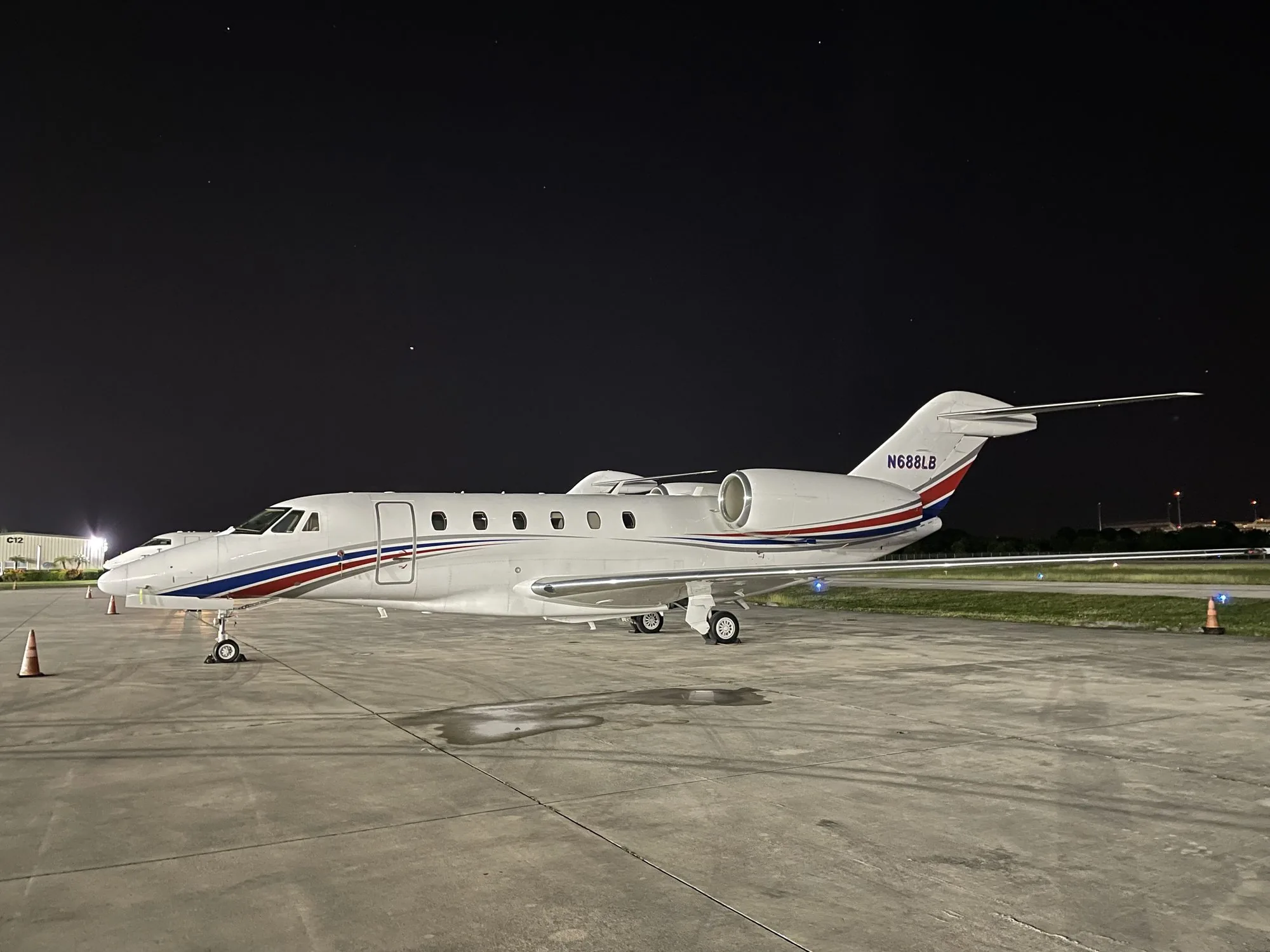
Both new and pre-owned aircraft qualify, as long as they're new to you. Jet Corp sources aircraft that fit the program, like the Global Express and Citation X.
The aircraft goes to work in our Part 135 charter network: income-producing business use, the foundation of a qualifying structure.
Qualifying investors write off the full purchase price against income in the first year under 100% bonus depreciation.
CARNIVORE keeps the aircraft flying paid legs. You hold an income-producing asset with the tax benefit already banked.
What the write-off is worth to you depends on your purchase price, your tax rate, the character of your income, and your ability to use the deduction, and no website can calculate that for you. Bring your tax planner, and we'll work with them directly: the aircraft, the charter placement, and the documentation that supports the deduction.
Nothing on this page is tax, legal, or investment advice. Depreciation taken is generally recaptured on sale, and active vs. passive activity rules affect how much of the deduction you can use. Consult your own advisors about your specific circumstances.
No dollar cap and no investment phase-out. The full aircraft purchase price is deductible in year one for qualifying business use, which is why virtually all business jet purchases rely on bonus depreciation. Applies to new and pre-owned aircraft alike.
Capped at roughly $2.5 million (indexed), phases out above an annual investment threshold, and is limited by business income. Useful for smaller equipment, but jets typically exceed the cap, which is why Section 179 aircraft purchases are rare and aircraft bonus depreciation is the tool that matters.
Canada now allows a full first-year write-off too, reached through Capital Cost Allowance rather than bonus depreciation. We cover it separately.
Read the Canadian aircraft write-off guideJet Corp's private jet investment structures pair the year-one deduction with charter income: a guaranteed-return program at a contractually fixed 6–9%. We source the aircraft, place it with our vetted Part 135 operators, and manage everything. If you would rather own a share than the whole aircraft, see what fractional jet ownership costs and how to compare fractional programs.

Tell us what you're planning and we'll walk you through how the write-off pairs with charter income. Qualified investors only.